kk nutrivet
Editorial contributor · Published 15 September 2026
Last updated 16 September 2026
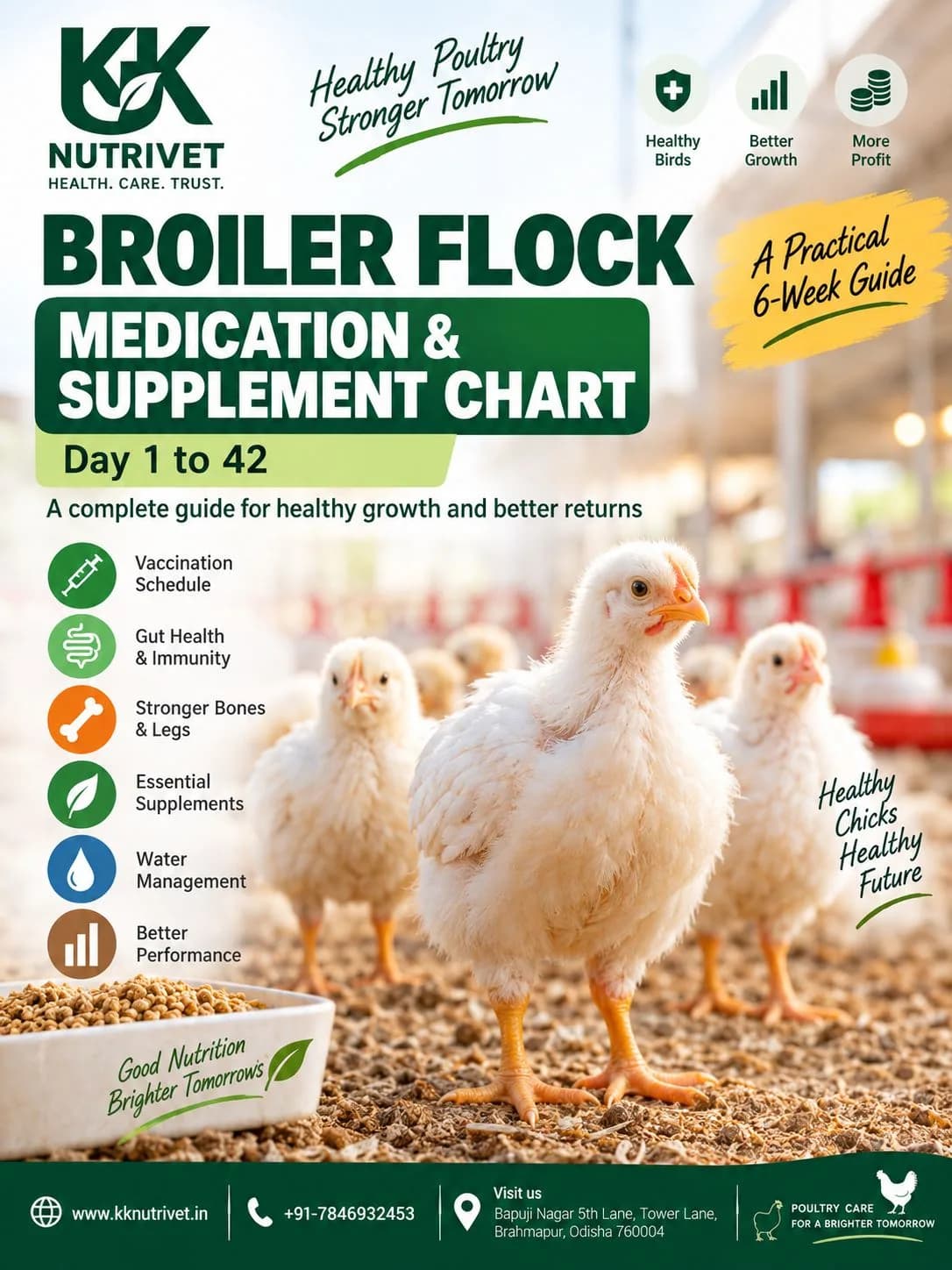
Broiler Flock Medication & Supplement Guide: Day 1 to 42
Raising healthy broiler chickens requires more than just providing feed. Proper water management, nutrition, vaccination, hygiene, environmental control, and responsible supplementation all contribute to healthy growth and better flock performance.
This practical 6-week broiler care guide from KK Nutrivet explains the key management priorities from Day 1 through Day 42.
Important: This article is intended for general educational purposes. Vaccines, medicines, antibiotics, dosages, and withdrawal periods should always be used according to the product label and under the guidance of a qualified veterinarian.
---
Week 1 – Day 1 to 7: A Strong Start
The first week is one of the most important stages of broiler farming. Newly arrived chicks can experience transportation stress, dehydration, and environmental changes.
Day 1 – Hydration & Stress Recovery
Provide chicks with immediate access to fresh, clean drinking water and quality starter feed.
Electrolytes or veterinarian-recommended vitamin supplementation may be useful when chicks experience transportation or heat stress.
Days 2–5 – Monitor Early Chick Health
Closely observe:
- Feed consumption
- Water intake
- Chick activity
- Brooding temperature
- Droppings
- Mortality
- Litter condition
Antibiotics should not be routinely given to healthy chicks for prevention unless prescribed by a veterinarian for a diagnosed or clearly identified bacterial problem.
Day 6 – Support Gut Health
Maintaining good intestinal health helps chicks digest feed and absorb nutrients efficiently.
Depending on flock requirements, probiotics or other gut-health products may be recommended.
Day 7 – Vaccination
Vaccination against diseases such as Newcastle Disease may form part of the flock's vaccination program.
The actual vaccination schedule should depend on hatchery vaccination history, local disease risks, vaccine instructions, and veterinary advice.
---
Week 2 – Day 8 to 14: Gut Health & Immunity
During the second week, broilers begin consuming considerably more feed and water.
The main focus should be maintaining digestive health, immunity, clean water, and good environmental conditions.
Days 8–13 – Nutritional Support
Depending on flock condition and professional advice, nutritional support may include:
- Electrolytes
- B-complex vitamins
- Multivitamins
- Probiotics
- Gut-health supplements
These products should supplement good nutrition rather than compensate for poor-quality feed or management.
Day 14 – IBD/Gumboro Vaccination
An IBD (Gumboro) vaccine may be included in broiler vaccination programs.
Timing can vary significantly between farms, so follow your veterinarian's recommended vaccination schedule.
---
Week 3 – Day 15 to 21: Support Bones, Legs & Growth
Broilers start gaining weight rapidly during this period. Their bones and legs must support the increasing body weight.
A balanced broiler diet should provide appropriate levels of calcium, phosphorus, vitamin D3, amino acids, vitamins, and minerals.
Key Management Priorities
- Maintain dry litter
- Provide sufficient feeder and drinker space
- Monitor leg strength
- Maintain good ventilation
- Observe feed and water consumption
- Check flock uniformity
- Avoid unnecessary supplementation
Additional calcium or vitamins should only be provided when appropriate because excessive supplementation can also create nutritional imbalances.
---
Week 4 – Day 22 to 28: Rapid Growth & Performance
Week 4 is a major growth period.
As birds become larger, their requirements for feed, water, ventilation, and floor space increase.
What Farmers Should Monitor
- Daily water consumption
- Feed intake
- Body-weight gain
- Feed conversion
- Litter moisture
- Respiratory signs
- Leg problems
- Mortality
Good ventilation becomes particularly important as larger birds generate more heat, moisture, and waste.
Electrolytes or other nutritional supplements may be useful during heat stress when recommended appropriately.
---
Week 5 – Day 29 to 35: Finish Strong
By Week 5, many broilers are approaching their target market weight.
The focus should shift toward maintaining performance while minimizing unnecessary stress.
Important Areas to Watch
- Leg strength
- Feed consumption
- Water consumption
- Flock uniformity
- Ventilation
- Litter quality
- Heat stress
- Signs of disease
Avoid unnecessary changes in feed or management during this period.
Consistent environmental conditions can help birds maintain good growth until marketing.
---
Week 6 – Day 36 to 42: Market Preparation & Withdrawal Period
Food safety becomes extremely important as broilers approach processing or sale.
If veterinary medicines have been administered during the production cycle, farmers must carefully observe their withdrawal periods.
What Is a Withdrawal Period?
A withdrawal period is the required amount of time between the last administration of a veterinary medicine and slaughter/processing.
This helps ensure residues are below applicable safety limits.
Withdrawal periods are product-specific. Never assume every antibiotic or veterinary medicine has the same withdrawal period.
Always check the product label and follow veterinary instructions.
---
Vaccination Management
A broiler vaccination program should be designed according to:
- Local disease prevalence
- Hatchery vaccination history
- Farm disease history
- Maternal antibody status where relevant
- Vaccine manufacturer's instructions
- Veterinary recommendations
When vaccines are administered through drinking water, carefully follow instructions concerning water quality, preparation, sanitation products, and administration time.
---
Clean Water Is Essential
Water is one of the most important but sometimes overlooked parts of poultry management.
Broilers should always have access to fresh and clean drinking water.
Regularly inspect:
- Water tanks
- Pipelines
- Drinkers
- Water pressure
- Water temperature
- Water quality
A sudden change in water consumption can also be an early indication of a flock-management or health problem.
---
Responsible Use of Antibiotics
Antibiotics should not be used as routine growth promoters or automatically included in every broiler cycle.
They should be used only when medically appropriate and according to veterinary guidance.
Responsible antibiotic use helps protect:
- Bird health
- Food safety
- Medicine effectiveness
- Consumers
- Long-term farm sustainability
Always maintain records of treatments administered to the flock.
---
Daily Observation Is Your Best Management Tool
Even the best feed, medicine, or supplement cannot replace good flock management.
Spend time observing your birds every day.
Healthy broilers should generally be active, eating, drinking, and distributed appropriately throughout the poultry house.
Changes in activity, feed intake, water consumption, breathing, droppings, or mortality should be investigated early.
---
Need Poultry Medicines & Supplements?
KK Nutrivet provides access to veterinary medicines, poultry supplements, nutritional products, and animal-care products for farmers and animal owners.
For medicine selection or treatment-related questions, consult a qualified veterinarian.
KK Nutrivet – Health. Care. Trust.
Website: [www.kknutrivet.in](http://www.kknutrivet.in)
Phone / WhatsApp: +91-7846932453
Visit us: Bapuji Nagar 5th Lane, Tower Lane, Brahmapur, Odisha – 760004
---
Disclaimer
This content is provided for educational and general poultry-management guidance only. It is not a prescription or a substitute for veterinary diagnosis.
Disease conditions, vaccination schedules, medication requirements, dosages, and withdrawal periods can vary between farms and products. Always follow the product label and consult a qualified veterinarian when treating sick birds.